
Botswana Delegation Conducts Successful FAT Tour in Europe
In June, a delegation of 10 representatives from Botswana travelled to Germany and The Netherlands to conduct a Factory Acceptance Test (FAT) for various components of the Vacuum Station.
The group included members from the Government of Botswana’s Department of Technical Services, Water Utilities Corporation, the consulting engineering firm Bothakga Burrow, the environmental consulting firm, and the construction company, Ossy & Classic Clean JV. Andrew Davies from Multi Waste (Flovac’s licensee in Botswana) and Wouter Harperink from Flovac Germany also joined the tour.
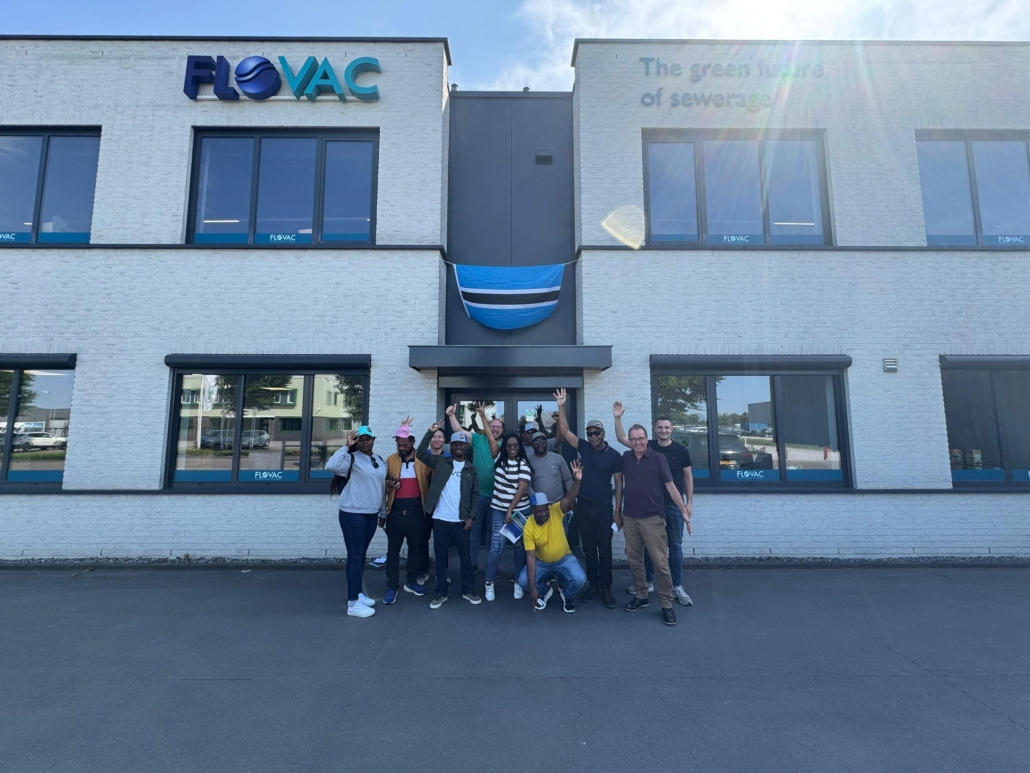
Group Picture in front of the Flovac Office
The trip began in the picturesque town of Herborn, Germany, with a visit to the Herborner Pumpenfabrik. There, the group was welcomed by Managing Director Wolfram Kuhn—great-great-grandson of the company’s founder—who guided them through the production process of Herborner’s sewage pumps. The FAT was successfully completed on the testing rig, demonstrating the pump’s capabilities.

FAT test of the Herborner sewage pump
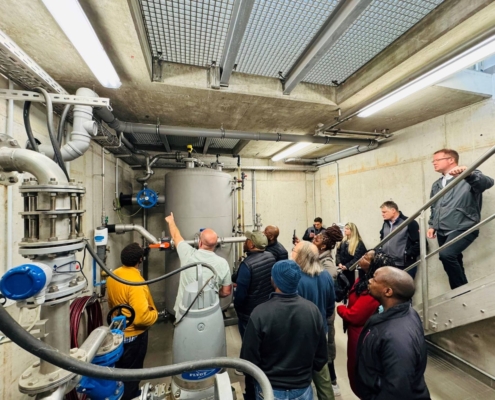
Inside the Flovac Vacuum Station of Dolgen
On the second day, the team visited a Flovac vacuum system in Dolgen, Germany. The Director of Operations, together with local maintenance personnel from Stadtwerke Sehnde, explained the functionality and operation of the vacuum system. Later that afternoon, the group toured Beisner Elektrotechnik, a family-owned company with extensive experience in manufacturing electrical cabinets for Flovac and for this particular project.
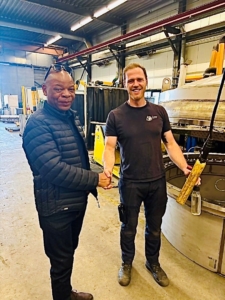
Botswana consultant meets welder of a vacuum tank
The third day featured a visit to the production facility of A. Leering Enschede in The Netherlands, where the FAT of the stainless-steel vacuum tank took place.
Known for delivering top-quality stainless-steel components for high-end clients, Erik Vunderink walked the team through each step of the production and quality control process. A highlight of the visit was a meeting between the Botswana consultant and the welder responsible for constructing the vacuum tank.
In the afternoon, the group visited Flovac’s main production facility, where they observed the manufacturing and testing processes of the vacuum valves, controllers, and monitoring system. On the in-house testing vacuum system, the full functionality of the components was demonstrated.

Testing Controllers at Flovac
On the final day of the tour, the group visited Busch Vacuum Solutions in Woerden, where they learned about the advantages of the Mink rotary claw vacuum pump. The visit concluded with a guided tour of the facility, followed by a relaxing boat tour through Amsterdam’s iconic canals.
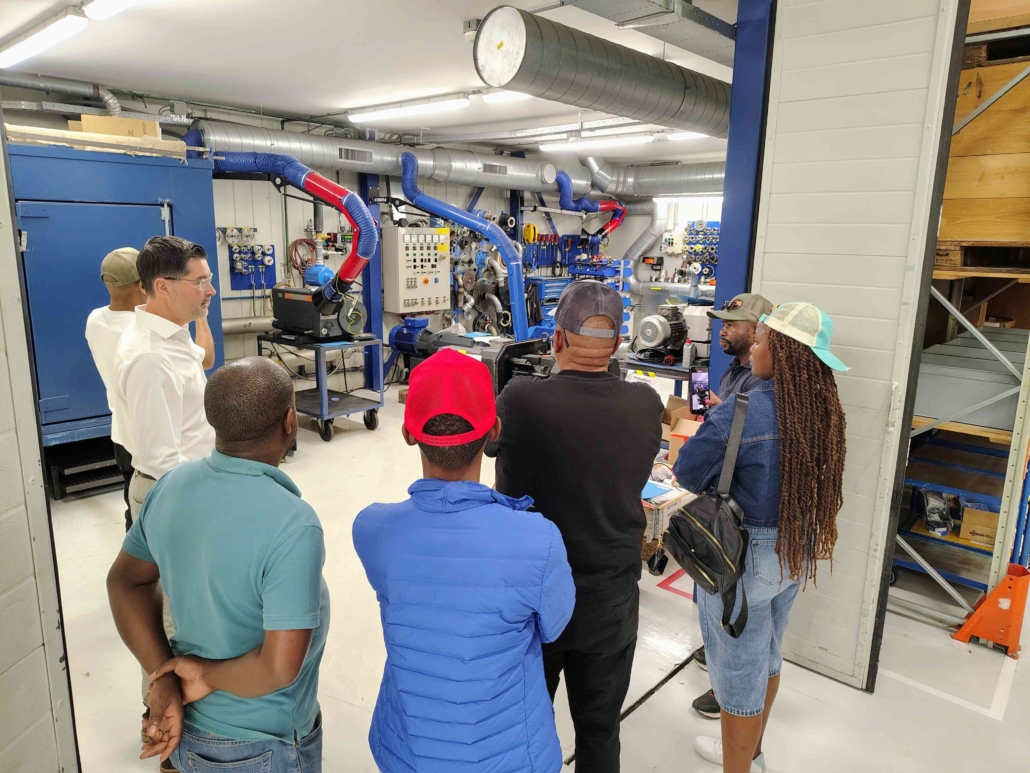
Testing of Vacuum Pump at Busch
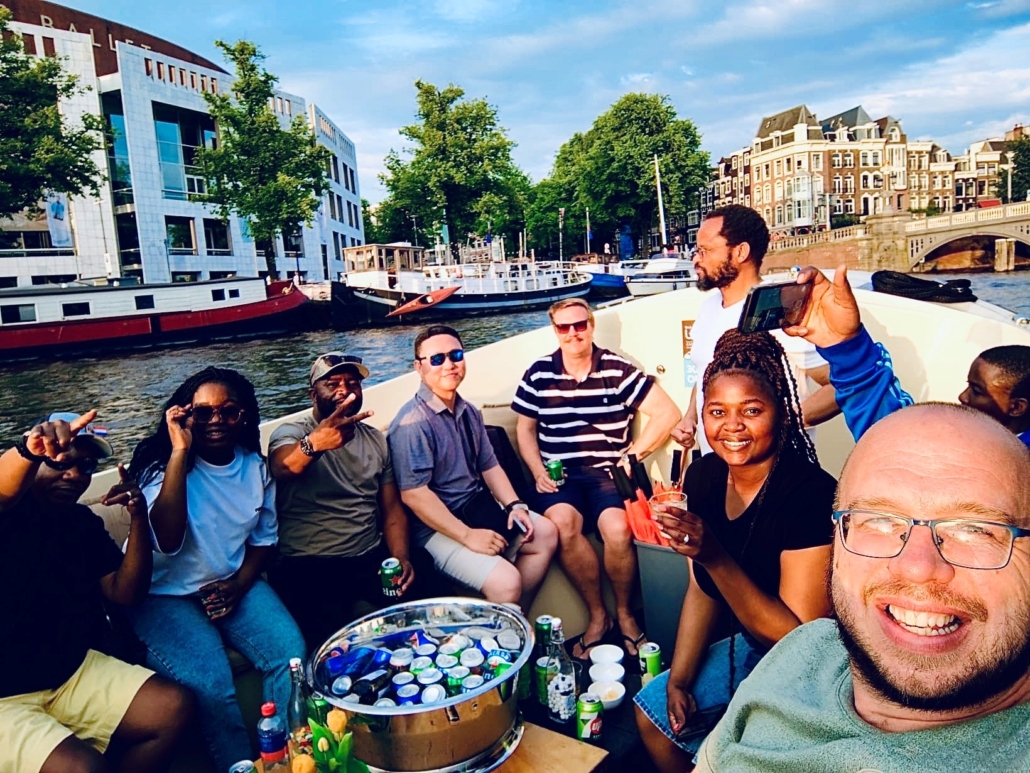
Canal Tour of Amsterdam
Flovac would like to express its sincere appreciation to the representatives from Botswana for their time, cooperation, and the successful completion of the FAT. We also extend our gratitude to all our suppliers for their hospitality, dedication, and ongoing partnership. We look forward to continued collaboration for many years to come.

 In 1968 one of the world’s largest 2-inch vacuum systems was installed at Sylvania Waters, 12 km south of Sydney Australia. The vacuum valves in fiberglass pits collected wastewater from 2 houses sending it to the vacuum pump station. The early system used a ball float controller, similar to what was used in old toilet cisterns. As this was not a separated grey/black water system, a 2-inch valve was clearly going to be a choke point with a 3-inch toilet drainpipe. In 1994 we were hired by Sydney Water to fix up the system, replace the valves and float controllers. Sadly because of the collection pit size and the vacuum main size it was not possible to increase the valves to 3 inch, but the system was improved.