Posts

My Vacuum Pumps are Due for an Upgrade – What Next ?

When a vacuum sewer system was planned in your area, there was probably an options study done showing whole of life costs. There was an expectation that over the life of the system (100 years) there would be items that would wear out and need replacing. Just as there would be components that would needs parts replaced through normal maintenance. (Asset Life)

For the rotary vane vacuum pumps, that would mean oil and filter changes. According to the pump manuals you would expect to do a fairly extensive motor overhaul at year 5 with a possible replacement at year 15. Through good care, we have seen many vacuum pumps have their lives extended considerably. That has been especially true of liquid ring pumps.

Many of the systems built prior to 1996 used liquid ring pumps (the days when water wasn’t considered a scarce resource). Since then, there has been a mixture of mainly rotary vane pumps for larger systems with smaller systems using dry running claw pumps. There have been a few outlier pumps like oil sealed screw pumps and even some rotary lobe pumps.

The vacuum pumps in your system would have been sized based on an air to liquid calculation based on the length of vacuum mains and the volume of the mains. Operationally we always look to the amount of air it takes to move the liquid through the system. A well run fully developed system should run at about an 8 to 1, or 10 to 1 air to liquid ratio. We know that if that creeps up to 30 to 1 that there is too much air in the system, and it should be tuned. A high rate like that would suggest that the vacuum pumps would be running far more than they need to. If the ratio though was lower at about 4 to 1 or 6 to 1, we would know there was too much water relative to air. This might mean the discharge pumps are running longer than they should, relative to the vacuum pumps. This might be due to I&I (infiltration and inflow) or higher flows than expected in the catchment. (Ask us for the calculation sheet for the air to liquid ratio)

With a good air to liquid ratio, we would expect the vacuum pumps to run at about 6 to 8 hours per day, in total, in a fully developed system. If your pumps are running longer than that you should check your air to liquid ratio to see what is impacting your system.

Two of the biggest mistakes that we commonly see when utilities are looking to upgrade their pumps is

  • Increasing the size of the pumps as the current run time is excessively long
  • Changing from a oil lubricated pump (R5) to a dry pump (Mink) to reduce operational costs.

Increasing the size of your pumps

This might be a great idea if done for the right reason. Talk to your engineers. If you can increase capacity at the station maybe that will allow you to accept more flows from subdivisions, new areas, higher density (more revenue).

If though you are only increasing the size because your pumps are running a long time then you need to fix the problem first. Why are the pumps running so long? Is the system tuned correctly? Are there leaks in the valves or pipework? Oversized pumps can increase the problems in a network by creating more leaks.

Once the system is tight and you have an accurate idea of your air to liquid ratio then you can make a more informed decision.

Changing to Mink Pumps

If the change is because you are using too much oil and too many filters, then it would suggest that your pump run hours are too long and you should take the steps mentioned above.

In small systems Mink pumps and their equivalent have improved substantially but in large systems where you are changing over from R5 630 pumps or their equivalent there are a number of downsides that utilities are now discovering.

In the larger sizes the Mink pumps run a lot hotter and potentially noisier. The heat has an impact on pipe materials in the station, venting of the station, and will badly affect odour control measures.

On larger systems there is a limit to the depth of vacuum that these type of pumps will achieve and often the result is an increase in energy use and pump run hours.

Some utilities have also tried the addition of variable speed drives in their pumps as a way of increasing vacuum in the lines and decreasing line flooding. The speed is often varied due to the amount of vacuum pressure in the lines or at the end. It is rare to see this used in wet/sewer type systems and is more common in dry/food processing applications. As vacuum sewers are based on a ratio of air to liquid, the use of a VSD disguises problems in the system and can ultimately increase problems in the networks.

Upgrading of your vacuum pumps is inevitable – we can help you with finding the right solution for your system

Call our Engineering or Operations Group to organise the following as a first step.

  • System Audit To correctly size the vacuum pumps an analysis of the air to liquid ratio is needed. The system needs to be air tight to do this. If there are leaking vacuum valves, due to old age, air leaks in the pump station or elsewhere, these need to be fixed prior to any upgrade as any larger or new vacuum pumps could make these harder to find and just lead to higher energy costs and high oil use. An Audit will check the current state of your system; give you an understanding of what will be required to accomplish the outcomes you want
  • Capacity Audit What was the system designed to handle, what can it potentially handle for the next 15 years.

To read more about Upgrades Click Here

Reef Island Resort Official Opening in Bahrain

A high profile project and one of the largest scale vacuum sewerage systems ever designed had an official opening this month in Bahrain for its key resort project.

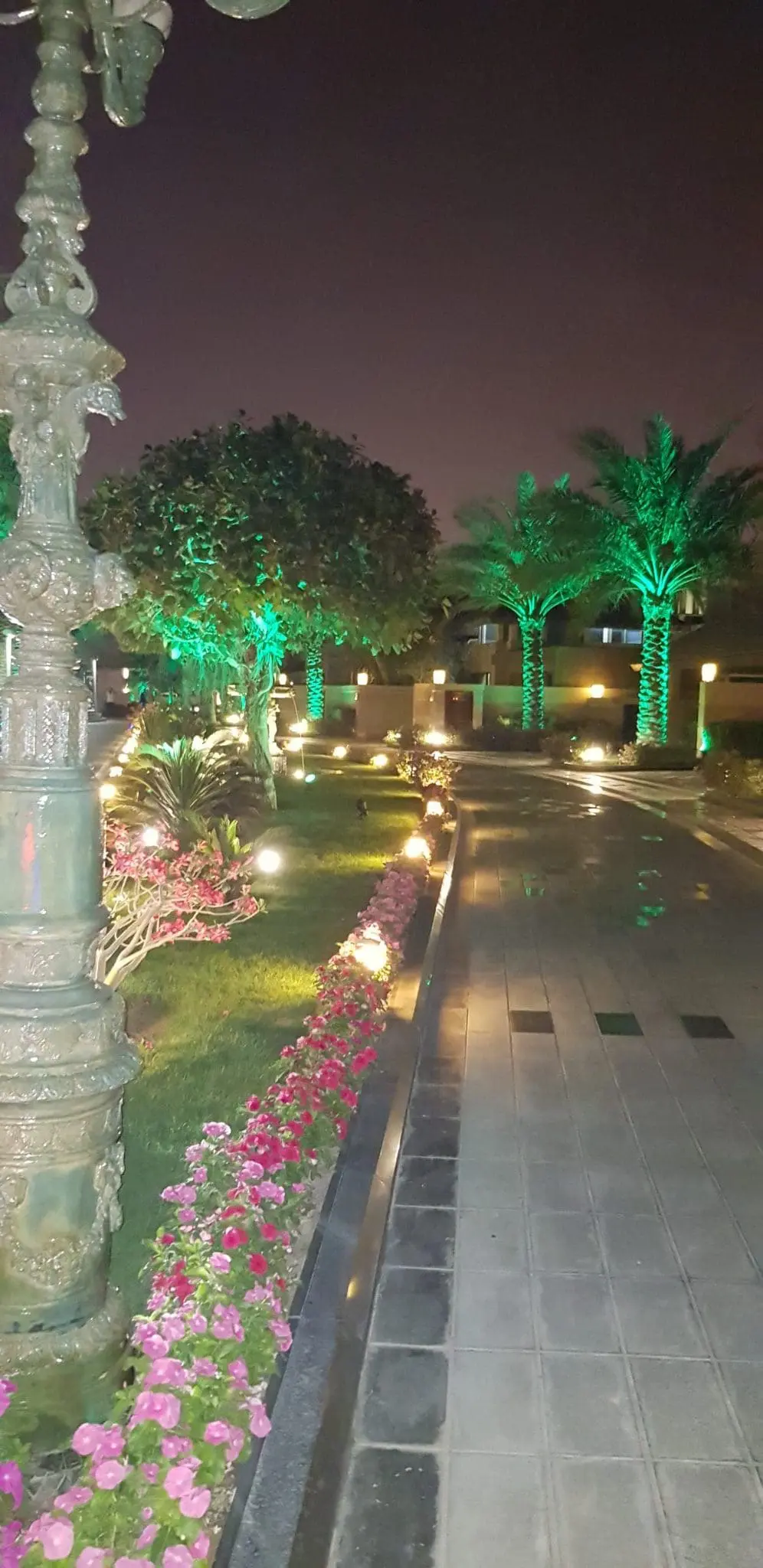
Reef Island decided to use a Flovac vacuum sewerage system due to the ease and speed of installation compared to using a gravity sewer systems. There was also a decision by the developers of the resort that they wanted to use world class environmental best practice and through research had discovered that this is what Flovac delivered.

The whole island is serviced by just a single vacuum station which is completely concealed underground.  The island features not only this world class resort but numerous bungalows, apartment buildings and world class restaurants.

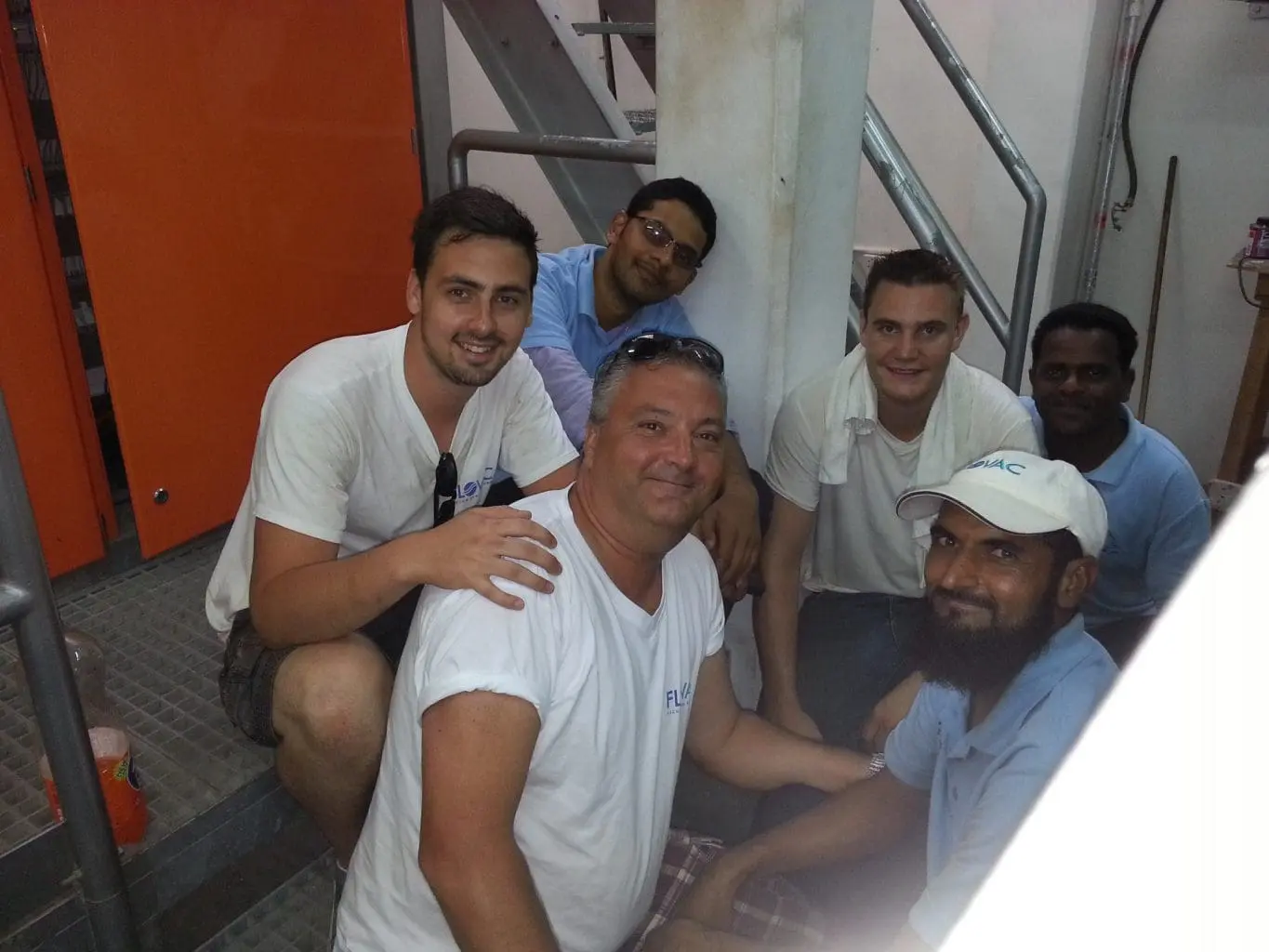
For the special opening Flovac’s Chairman Mr Willem Gooren was invited as a special guest along with members of the Flovac team who were involved with the system development.

To assist with the operations of the vacuum system Flovac has installed a monitoring system that enables the operations center in Holland to provide additional remote support. With our senior operational teams able to review the system in real time, fast communication can occur to assist those based locally.

High Flow Projects – Reef Island Bahrain

Over the last five years building work has continued at Reef Island in Bahrain and this year Flovac has added its proprietary wireless monitoring system to assist the operations group with troubleshooting the system.

Concept Design for Reef Island Bahrain. Shows 55 story building, 32, 16 and 8 story apartments.

When design work commenced on the Reef Island project in 2008 many engineers suggested that vacuum systems could not be designed to handle flows coming from high rise buildings such as those being planned at Reef Island.

The developer at Reef island was planning a number of high rise apartment blocks which included 8, 16 and 32 story blocks. There was also a plan for a 55 story building on the reclaimed land site.

As Flovac had previously done a number of high flow projects including the world’s first in Bangkok, Thailand; ( See Thailand Project details)  there had also been a number of other high flow projects including oil refineries, industrial area’s , schools, hotels, shopping centres and hospitals.

Ensuring that the flows do not steal vacuum from other lots upstream and sticking to a limited flow per valve has ensured that the Reef Island project has run smoothly and handled the flows easily.

For more details on Reef Island

Coping in a world with less water

The Downside of Saving Water

In recent times severe water shortages in many parts of the world have led Water Authorities and consumers to rethink how water is used in households. Water restrictions in many areas have drastically cut the amount of potable water used, with car washing and garden watering severely restricted. Water savings devices have now been installed in many homes and many more products are now being developed. This is having a big impact on the way wastewater is taken from houses to be treated by municipal authorities.

Many municipalities will soon adopt policies allowing greywater to be re-used within the house or on the garden. Products such as water efficient showerheads, washing machines, and flow inhibitors on taps as well as low flush toilets are reducing how much wastewater is sent to the treatment plant for treatment. Community education programmes are also informing consumers about ways to reduce water use.

Wastewater can be categorised into two components; greywater and blackwater. The main difference between greywater and blackwater is the biological and solids content. Blackwater is essentially the water that has all of the solids in it and cannot come into contact with humans unless treated. Household wastewater can be broken down as follows:-

Greywater {f2ac4d1e1d40dc2e2d9280a1dfa90d854b2d8c80eba743affa37fc4ce2e16def} Blackwater {f2ac4d1e1d40dc2e2d9280a1dfa90d854b2d8c80eba743affa37fc4ce2e16def}
Showers Baths/Spa’s 33{f2ac4d1e1d40dc2e2d9280a1dfa90d854b2d8c80eba743affa37fc4ce2e16def} Toilets 32{f2ac4d1e1d40dc2e2d9280a1dfa90d854b2d8c80eba743affa37fc4ce2e16def}
Basin 5{f2ac4d1e1d40dc2e2d9280a1dfa90d854b2d8c80eba743affa37fc4ce2e16def} Kitchen 7{f2ac4d1e1d40dc2e2d9280a1dfa90d854b2d8c80eba743affa37fc4ce2e16def}
Laundry 23{f2ac4d1e1d40dc2e2d9280a1dfa90d854b2d8c80eba743affa37fc4ce2e16def}
Total 61{f2ac4d1e1d40dc2e2d9280a1dfa90d854b2d8c80eba743affa37fc4ce2e16def} 39{f2ac4d1e1d40dc2e2d9280a1dfa90d854b2d8c80eba743affa37fc4ce2e16def}

In most cities and towns wastewater moves from houses via a gravity reticulation network to the treatment plant, where it is treated to an acceptable level and sent to an ocean outfall or into the ground for further long term treatment or increasingly recycled for use in industry or public areas.

Gravity pipework is laid with sufficient grade (1/60;1/80;1/100) to allow for water to push any solids down the pipe toward a pump station which will bring it back to the surface and then gravitate again to the next pump station, until ultimately it will bring the wastewater to the treatment plant. The pipework will sometimes need to be installed quite deep (5-10 metres) to minimise the number of pump stations required.

The Problem

There is however a problem in that current gravity sewer networks cannot cope with lower water flows in pipes in that it is water that transports solids down the pipe. If there is insufficient water, then there is no movement.
Gravity sewer mains are usually designed to allow for a 14{f2ac4d1e1d40dc2e2d9280a1dfa90d854b2d8c80eba743affa37fc4ce2e16def} solid load in the pipe. The other 86{f2ac4d1e1d40dc2e2d9280a1dfa90d854b2d8c80eba743affa37fc4ce2e16def} is water pushing the solids down the pipe. What happens if the solid load is 50{f2ac4d1e1d40dc2e2d9280a1dfa90d854b2d8c80eba743affa37fc4ce2e16def} as has recently happened in parts of drought affected Australia.

In previous years water authorities have designed their pipework and pump stations based on between 200-240 litres per person per day (l/p/d) There was also an allowance made for peaking factors (higher water use at peak times such as in the morning or evenings) and they have also allowed for the risk of stormwater infiltration, due to illegal connections or broken pipes. This stormwater allowance is usually 3 times the average daily allowance and can have very high cost impacts on the pipework, pump-station and treatment plant requirements.

The current water shortages and water saving devices as well as the separation of gray and black water have led to a reduction in daily allowances to 150-180 litres per person per day (l/p/d). This suggests that wastewater infrastructure can be smaller and therefore use less power but what has in fact been occurring is significantly higher maintenance requirements and even water use by the water authorities. As gravity systems require the use of water to move solids down the pipe network, less water coming from the household is creating blockages in greater numbers leading to odour problems as well as increased water and labour costs to manually flush the pipes of solids.

240 l/p/d 180 l/p/d 70 l/p/d *
Blackwater 94 70 70
Greywater 146 110 0
Total 240 180 70

* Greywater reuse at the house

In recent years many municipalities and water authorities have adopted the use of vacuum sewerage systems as their reticulation networks in areas where there is a high water table or very flat land or where it is too difficult to install a traditional gravity network. The very first vacuum sewers were installed in the late sixties but there has been a sharp increase in recent years as operators discover the lower operating cost versus their existing gravity systems. All pipework is laid at minimal depth and laid at a flat 1/500 grade. There is usually only one pump station required which has reduced the energy costs in the system. Differential air pressure is the driving principle and all solids and water are transported via air rather than water. The wastewater travels at a high velocity (4-6 metres per second) and so no blockages occur. As it is a tight system, damaged pipes are immediately repaired and no allowance is required for stormwater infiltration saving money and energy with the sizing of the infrastructure.

Vacuum systems have been used for many years to move 100{f2ac4d1e1d40dc2e2d9280a1dfa90d854b2d8c80eba743affa37fc4ce2e16def} solids this is common in many industrial applications and even in the home. This also applies to wastewater removal. The Flovac sewerage system can easily handle quite high concentrations of solids in the pipe.

Conclusion

For countries or towns with very little water available or have diminishing resources like Botswana, India, Oman, Australia and many others places, Flovac systems are really the only system that should be considered for removal of sewage.