
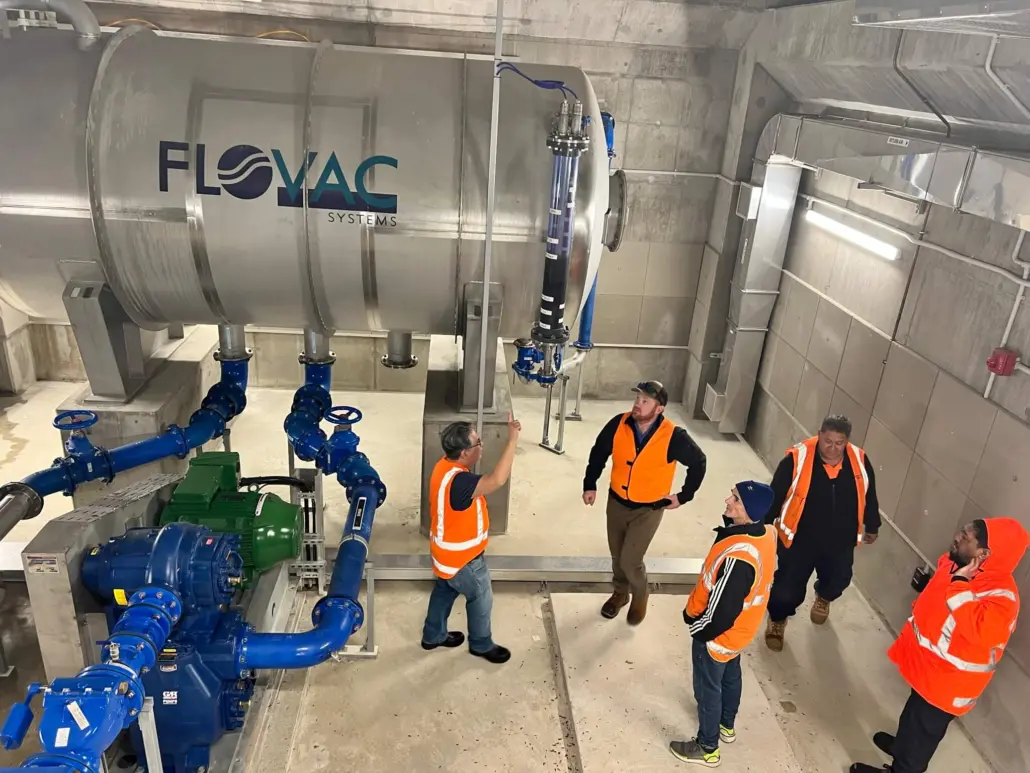
Vacuum Sewer System Concept Design and Budgeting
Vacuum Sewer System Concept Design and Budgeting
Vacuum sewer system concept design and budgeting involves early-stage planning to define system layout, key components, and cost drivers. This process helps developers and councils assess feasibility, compare infrastructure options, and establish realistic budgets before detailed design begins.
How Does Vacuum Sewer System Concept Design and Budgeting Work?
What is vacuum sewer system concept design?
Vacuum sewer system concept design is the initial engineering phase where the system configuration is developed based on site conditions and project requirements.
It typically includes:
- Preliminary network layout
- Identification of vacuum station location
- Estimation of system capacity and staging
- High-level infrastructure planning
This stage focuses on feasibility rather than detailed engineering.
How is budgeting approached during concept design?
Budgeting at concept stage is order-of-magnitude cost planning based on system configuration.
It considers:
- Pipe network extent and layout
- Number of collection points and interface valves
- Vacuum station requirements
- Installation complexity based on site conditions
The goal is to provide a realistic cost framework for decision-making.
What Factors Influence Vacuum Sewer System Concept Design and Budgeting?
How do site conditions impact concept design and cost?
Vacuum sewer system concept design and budgeting is highly dependent on site-specific factors.
Key influences include:
- Topography: Flat or uneven terrain affects layout
- Ground conditions: Rock, groundwater, or unstable soils impact installation
- Development density: Influences network size and capacity
- Environmental constraints: May limit construction methods
These factors shape both design approach and cost estimates.
How does system layout affect overall budgeting?
The configuration of the network directly influences cost.
Important considerations include:
- Pipe routing efficiency
- Location and size of the vacuum station
- Staging strategy for phased developments
- Integration with existing infrastructure
Optimised layouts can help manage both capital and operational costs.
What Should Be Considered When Planning Vacuum Sewer System Concept Design and Budgeting?
Early-stage planning requires coordination across multiple disciplines.
Key considerations include:
- Demand forecasting: Estimating wastewater volumes
- Staging requirements: Aligning infrastructure with development phases
- Vacuum station capacity: Allowing for future expansion
- Monitoring systems: Incorporating operational visibility
- Regulatory requirements: Ensuring compliance with local standards
A structured concept design process helps reduce uncertainty in later stages.
How Is Concept Design and Budgeting Applied in Residential Developments?
A typical example is a greenfield residential subdivision in early planning stages.
In this scenario:
- Developers need to compare sewer infrastructure options
- Site conditions may include flat terrain or high groundwater
- Budget certainty is required before approvals
Through concept design:
- A preliminary vacuum network layout is developed
- The vacuum station location is defined
- A budget estimate is prepared based on system scope
This enables informed decision-making before progressing to detailed design.
When Should Vacuum Sewer System Concept Design and Budgeting Be Undertaken?
Concept design and budgeting should occur early in the project lifecycle.
It is particularly important when:
- Evaluating sewer infrastructure options
- Planning new developments or subdivisions
- Assessing feasibility in challenging site conditions
- Preparing cost estimates for approvals or funding
Early analysis reduces the risk of redesign and cost escalation.
Vacuum Sewer System Concept Design and Budgeting
What level of detail is included in concept design?
Concept design provides a high-level layout and system configuration, not detailed engineering drawings.
How accurate are budget estimates at this stage?
They are indicative and based on assumptions, but provide a useful framework for decision-making.
Can concept design support staged developments?
Yes. It typically includes planning for phased infrastructure delivery.
What information is required to start concept design?
Site plans, development layout, and basic geotechnical or environmental data are typically required.
Does concept design include monitoring systems?
Monitoring requirements are usually considered at a high level to support future operation.
Planning Vacuum Sewer System Concept Design and Budgeting
For developers, councils, and consulting engineers, early engagement is critical.
Recommended steps include:
- Conducting a site feasibility assessment
- Defining development scope and staging requirements
- Engaging vacuum sewer specialists during early planning
- Using concept design outputs to inform budgeting and approvals
A structured concept design and budgeting process ensures the selected system aligns with both technical requirements and financial expectations.