
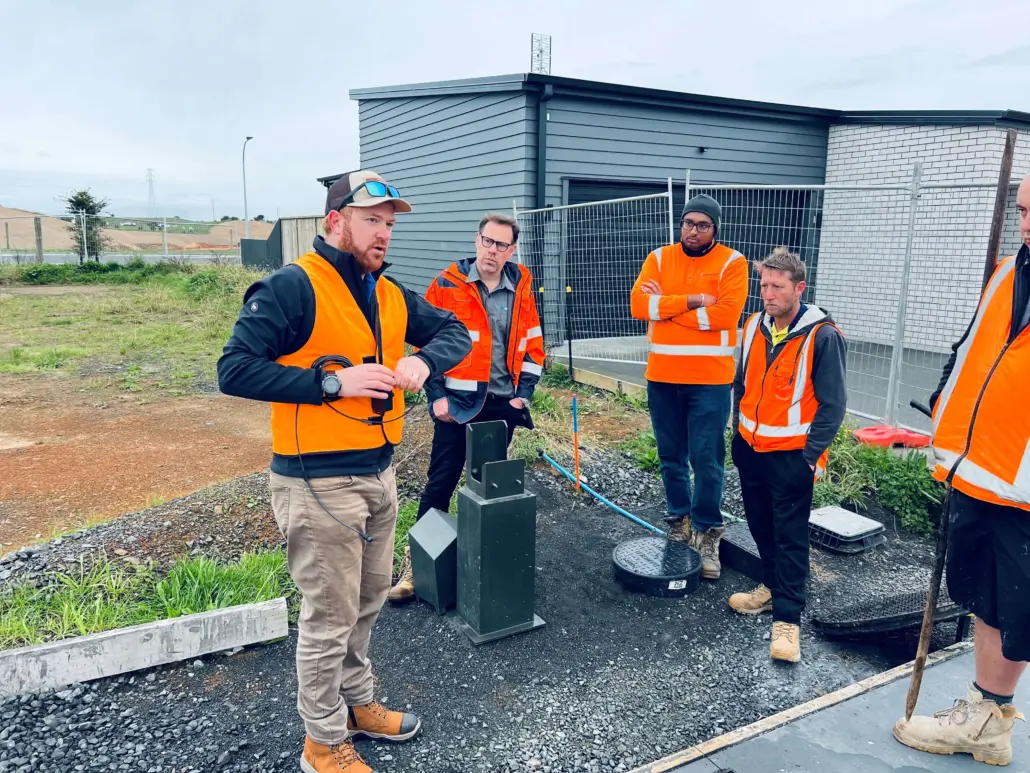
Vacuum Sewerage Systems For Residential Developments
Vacuum Sewerage Systems for Residential Developments
Vacuum sewerage systems are a practical alternative to conventional gravity sewers in residential developments where ground conditions, topography, or environmental constraints make traditional infrastructure costly or complex. They use differential air pressure to transport wastewater through sealed pipes, enabling shallow installation, flexible layouts, and controlled system performance—particularly valuable in greenfield estates, brownfield upgrades, and areas with high groundwater.
Core Topic Explanation
Definition
A vacuum sewerage system is a wastewater collection method that uses negative pressure (vacuum) within a sealed pipe network to move sewage from properties to a central vacuum pump station.
Instead of relying on gravity and continuous pipe gradients, the system operates intermittently via vacuum interface valves located in collection chambers. These valves open automatically, allowing wastewater to be drawn into the network.
How It Works
A typical residential vacuum sewer system includes:
- Collection chambers: Receive wastewater from one or more properties.
- Vacuum interface valves: Mechanically controlled valves that open when a set volume is reached.
- Vacuum pipe network: Airtight pipes installed at shallow depths.
- Vacuum pump station: Maintains system vacuum and transfers wastewater to downstream treatment or gravity systems.
Operational sequence:
- Wastewater flows by gravity into a collection chamber.
- Once a threshold level is reached, the valve opens.
- Differential pressure rapidly pulls wastewater and air into the network.
- Slugs of wastewater are transported to the vacuum station.
- The station separates air and liquid, then pumps wastewater onward.
This controlled, batch-based transport differs from continuous gravity flow and allows greater design flexibility.
Benefits / Advantages
Shallow Installation and Flexible Layout
Vacuum systems can be installed at relatively shallow depths because they do not depend on continuous gradients. This enables:
- Reduced excavation and trenching costs
- Avoidance of deep manholes
- Easier construction in flat or low-lying areas
- Simplified coordination with other underground services
This is particularly useful in residential estates where site levels are constrained or highly variable.
Suitability for Challenging Ground Conditions
Vacuum sewerage performs well in conditions that complicate gravity systems:
- High water tables
- Sandy or unstable soils
- Flood-prone or coastal environments
- Environmentally sensitive areas
Because the system is sealed, it also helps reduce risks associated with infiltration (groundwater entering the system) and exfiltration (wastewater leaking out).
Limitations or Considerations
While effective in many scenarios, vacuum systems require careful planning and operational understanding:
- Centralised dependency: The vacuum pump station is critical infrastructure; redundancy and maintenance planning are essential.
- Specialised components: Interface valves and control systems require trained servicing.
- Power requirement: The system depends on continuous power at the vacuum station.
- Design expertise: Proper hydraulic and pneumatic design is necessary to ensure reliable performance.
- Operational management: Monitoring and periodic optimisation improve long-term efficiency.
These factors make early-stage design input and lifecycle planning important.
Use Cases / Example
Greenfield residential estate on flat coastal land
A developer is planning a new housing estate in a low-lying coastal area with a high groundwater table. A conventional gravity system would require:
- Deep trenches
- Extensive dewatering during construction
- Multiple pump stations due to flat terrain
A vacuum sewerage system offers an alternative:
- Shallow pipe installation reduces excavation complexity
- Fewer pump stations are needed, as wastewater is conveyed to a single vacuum station
- Sealed infrastructure helps protect nearby sensitive waterways
This approach can simplify construction logistics while maintaining reliable wastewater collection.
When to Use This Approach
Vacuum sewerage systems are well suited to residential developments where:
- The site is flat or has minimal natural fall
- Ground conditions make deep excavation difficult or costly
- There is a need to minimise environmental impact
- Development staging or modular expansion is planned
- Existing infrastructure upgrades (brownfield) require minimal disruption
- Long-term operational visibility and control are priorities
They may be less suitable where gravity systems are easily achievable with minimal depth and complexity.
FAQ
What is the main advantage of vacuum sewerage in residential developments?
It allows wastewater to be transported without relying on continuous pipe gradients, enabling shallow installation and flexibility in difficult site conditions.
How does a vacuum sewer differ from a gravity sewer?
Gravity sewers rely on slope to move wastewater continuously, while vacuum systems use negative pressure to move wastewater in controlled batches through sealed pipes.
Are vacuum sewer systems reliable for large housing estates?
Yes, when properly designed and maintained, they can service residential developments of varying sizes. Centralised monitoring and maintenance support system performance.
What maintenance is required?
Routine inspection of valves, pump station equipment, and monitoring systems is required. Access to trained operators and support services is important.
Can vacuum systems be used in existing suburbs?
Yes, they are often used in brownfield upgrades where installing deep gravity infrastructure would be disruptive or impractical.
Next Steps
For residential developments, the suitability of a vacuum sewerage system depends on site conditions, staging strategy, and long-term operational goals. Early engagement during concept design—covering layout planning, lifecycle considerations, and system modelling—helps determine feasibility and optimise outcomes. A structured assessment can clarify whether a vacuum approach will reduce construction complexity, improve control, and align with the project’s technical and environmental constraints.