KNOW EXACTLY WHAT IS HAPPENING INSIDE YOUR VACUUM SEWER NETWORK

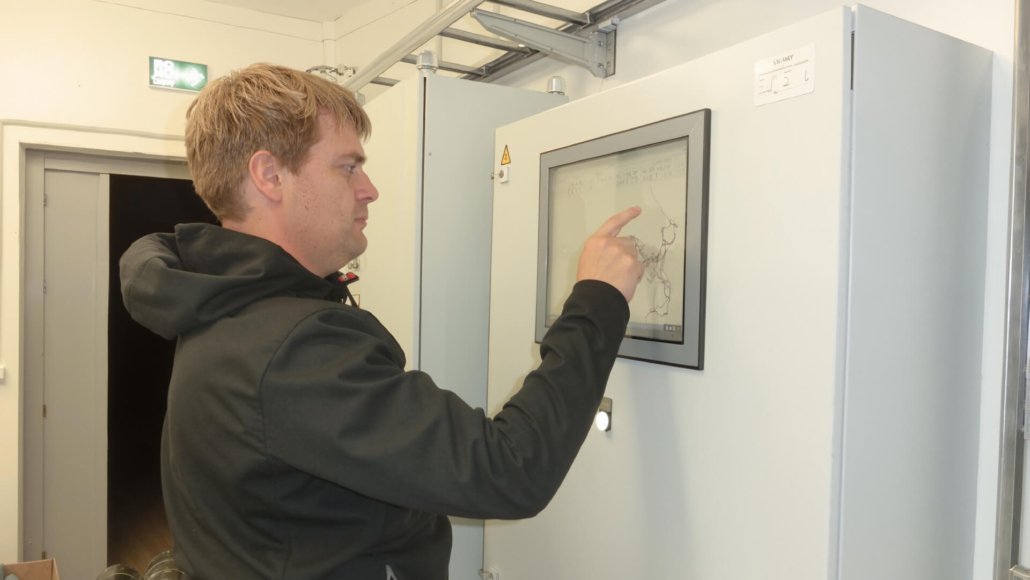
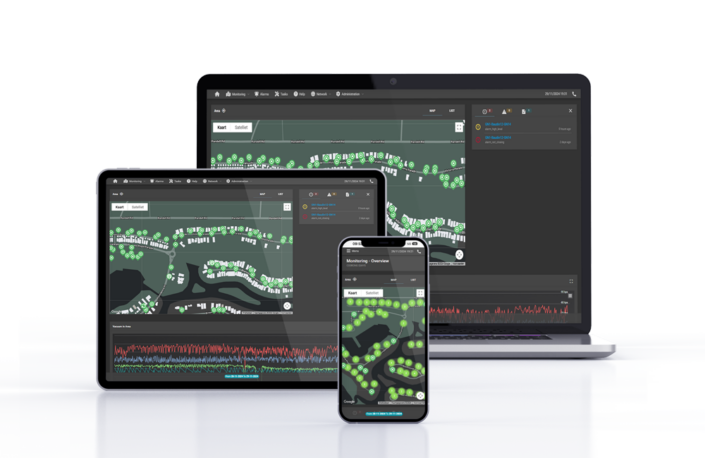
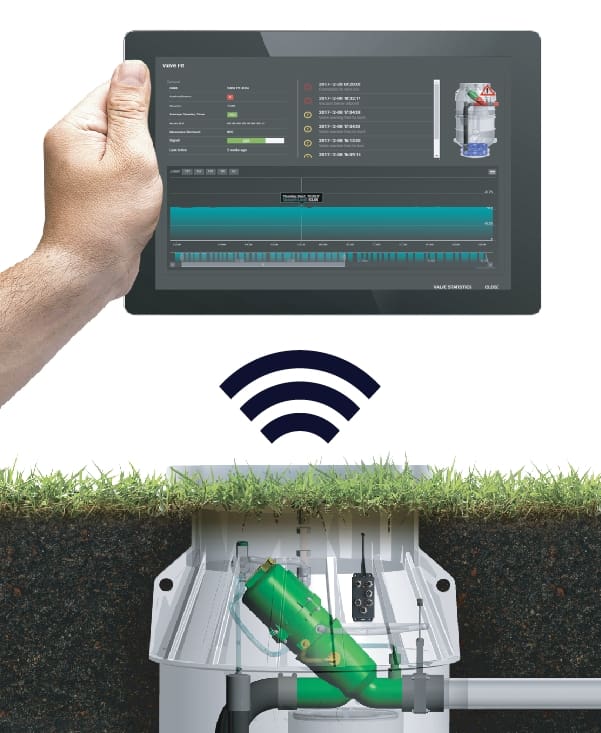
Flovac monitoring gives utilities, engineers, and operators complete real-time visibility across their vacuum sewer system, from individual collection pits through to the vacuum station.

That visibility changes how systems are managed, how faults are caught, and how operators work. It also changes the economics. Our benchmarking data across seven vacuum sewer systems shows that monitored, well-managed networks cost up to 25 times less to operate per connection than fragmented, unmonitored ones.

That is not a claim. It is a finding from operational data across real systems.
THE OPERATOR CONCERN — ADDRESSED DIRECTLY

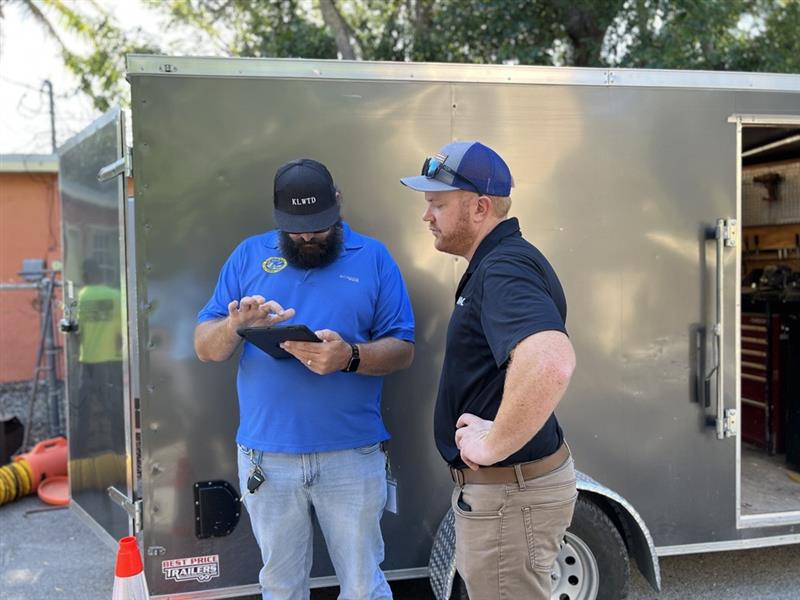
One of the most common concerns about vacuum sewer systems is whether operators can manage them.

It is a fair question. Vacuum networks behave differently from gravity systems. Faults are less visible. The interdependencies between valves, air systems, and vacuum levels are not always intuitive.

Monitoring resolves this.

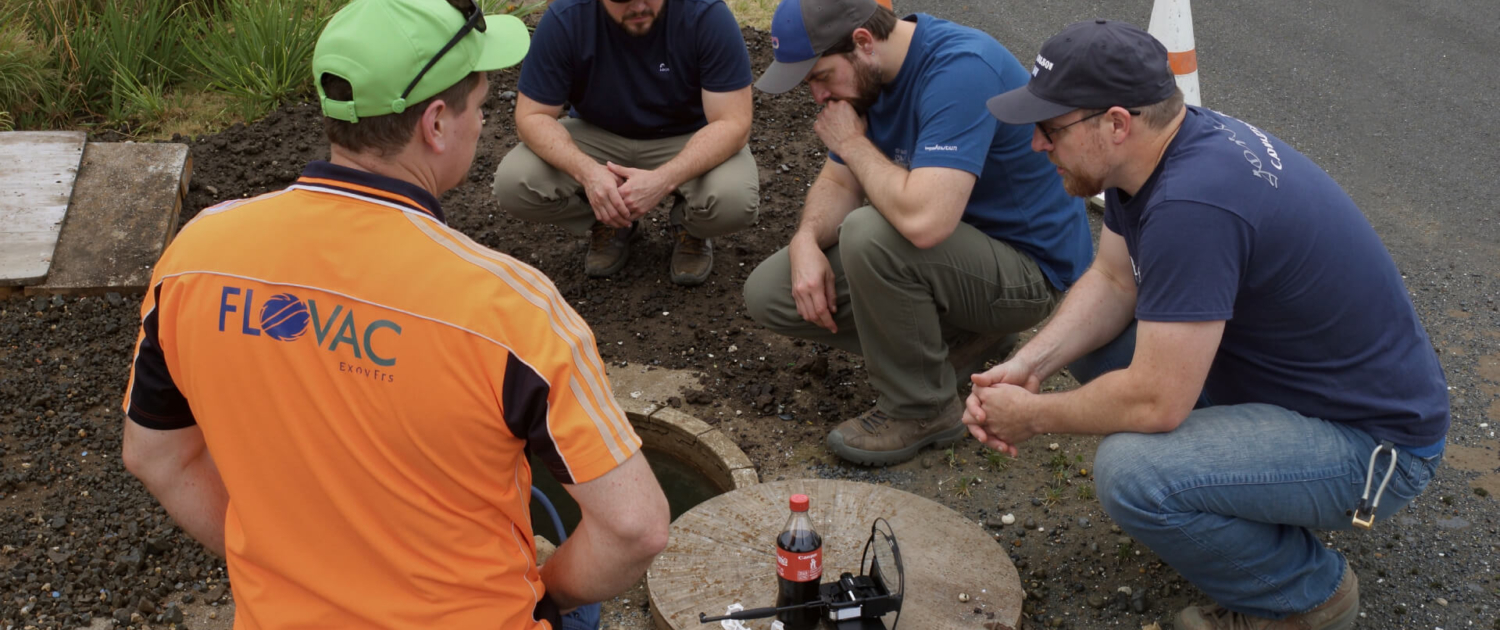
With real-time data across the network, operators do not need to rely on experience or intuition to find problems. The system tells them where to look, what is happening, and in most cases what is causing it. Our data from operating systems shows that 62% of faults on vacuum networks are either remotely detectable or diagnosable without a physical site visit with the right monitoring in place.

That changes what operators need to know. It changes how they are trained. And it significantly reduces the number of callouts that require field response.

A vacuum sewer network with active Flovac monitoring is, in practice, easier to operate than one without and often easier than a gravity network of equivalent size and age.

THE OPERATIONAL COST CASE

The difference between the best and worst performing vacuum sewer systems is not technology. It is operational structure.

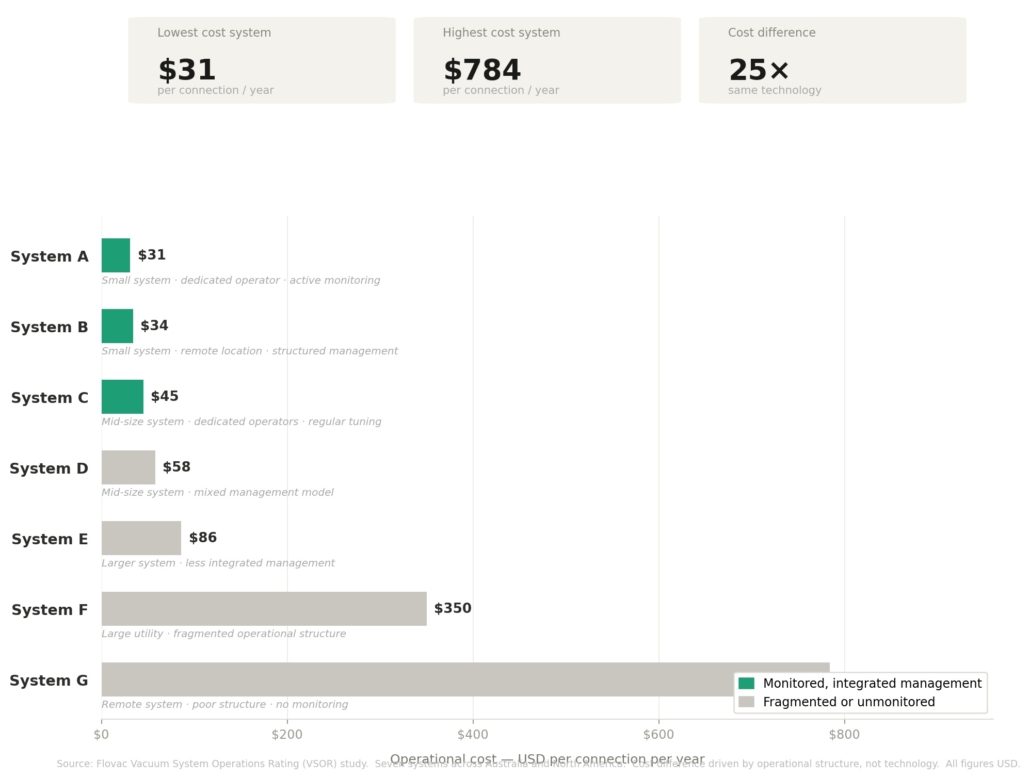
Flovac’s benchmarking study the “Vacuum System Operations Rating” compared operational cost per connection across seven vacuum sewer systems. The range: $31 to $784 per connection per year.

The systems at the lower end had active monitoring, integrated management, and operators close to the network. The systems at the upper end were fragmented, unmonitored, and reactive.

That 25-times cost difference is not driven by the age of the infrastructure or the size of the community. It is driven by whether the operator can see what is happening in the network, and respond before small problems become expensive ones.

For utilities evaluating long-term operational cost, this data matters. A vacuum sewer system with active Flovac monitoring does not just perform better than an unmonitored vacuum network. In many cases it performs better, at lower cost, than gravity or low-pressure alternatives operating without comparable visibility.

WHAT THE DATA SHOWS IN PRACTICE

Beyond fault detection — what monitoring reveals over time.

Real-time alarms are only part of what monitoring provides. The greater value accumulates over months and years of operational data.

Monitoring reveals patterns that no inspection regime catches: infiltration developing slowly across a catchment, valves beginning to cycle abnormally before they fail, sections of network under sustained stress as density increases, seasonal variations in system loading. It also validates or challenges the assumptions made at the design stage.

For engineers and asset managers, this transforms the monitoring platform into one of the most useful datasets in the utility’s possession. Capacity assessment, expansion planning, wet weather performance analysis, energy optimisation, and investment prioritisation all improve when they are based on how the system actually behaves, not how it was modelled.

The article Monitoring for Engineers and Utility Managers goes deeper on this, how monitoring data is helping engineers and utilities improve system performance, capacity planning, and long-term decision-making.

FOR EVERY LEVEL OF YOUR ORGANISATION

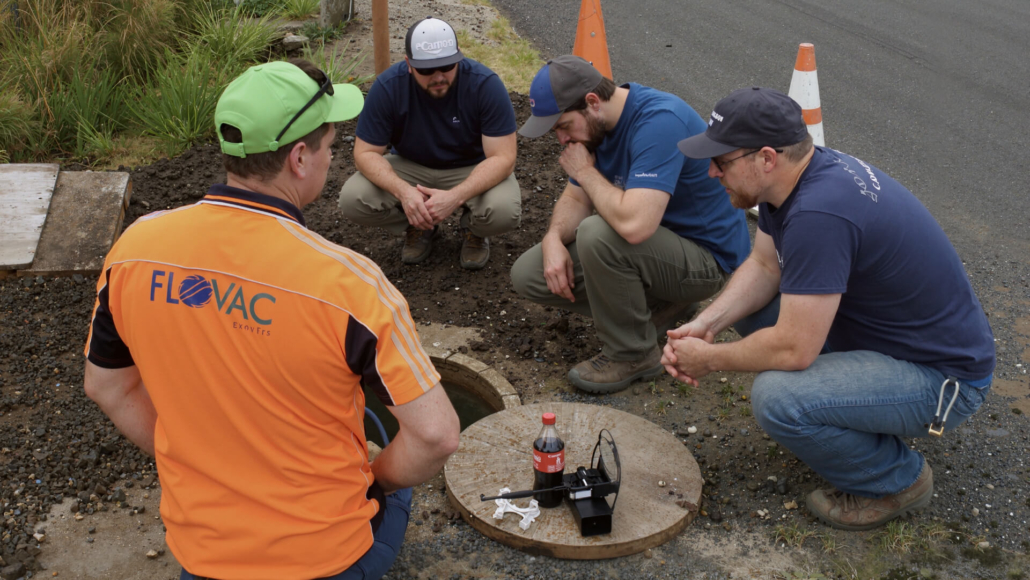
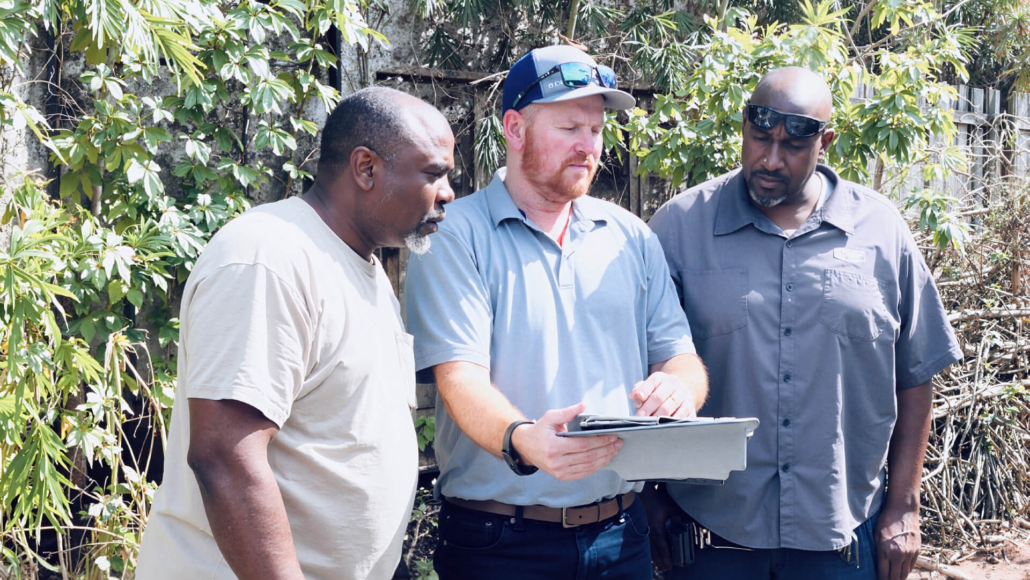
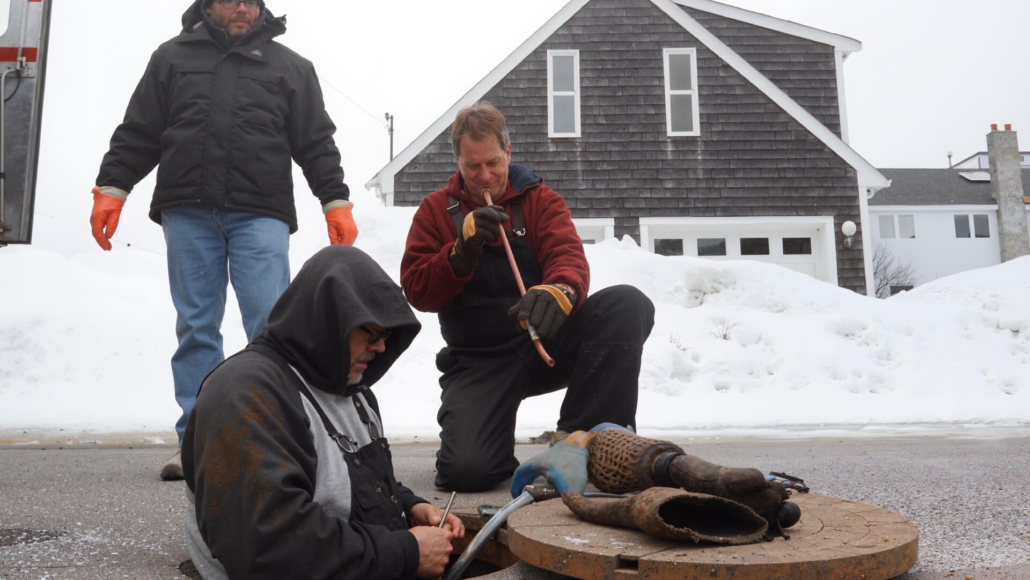
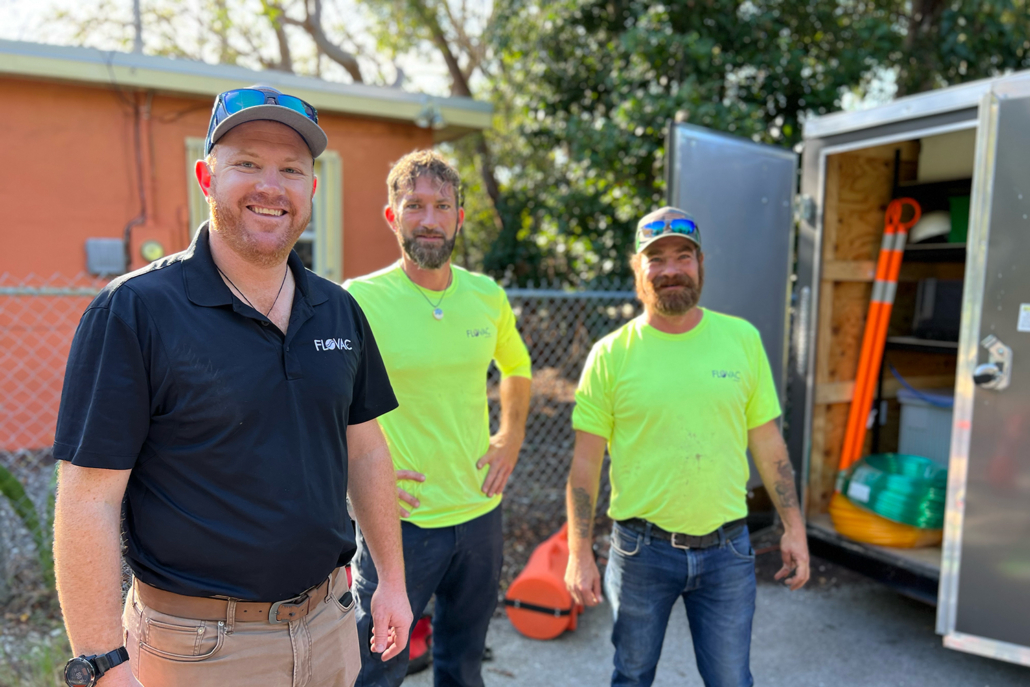
Operators Know where the fault is before you leave the depot. Real-time visibility across valve activations, vacuum levels, pump performance, and high level alarms means less time searching in the field and faster resolution when something needs attention.

Engineers Move from design assumptions to real performance data. Monitoring shows how your network behaves under actual loading, supporting capacity assessment, expansion planning, installation verification, and AI-assisted analysis of fault patterns and system trends. More on what monitoring offers engineers →

Asset managers Operational benchmarking, lifecycle data, and long-term trend analysis across your network. Know which areas carry the highest maintenance load, where investment is warranted, and how your system compares to comparable networks, backed by data, not estimates. More on what monitoring offers asset managers →

WHEN CONDITIONS ARE WORST

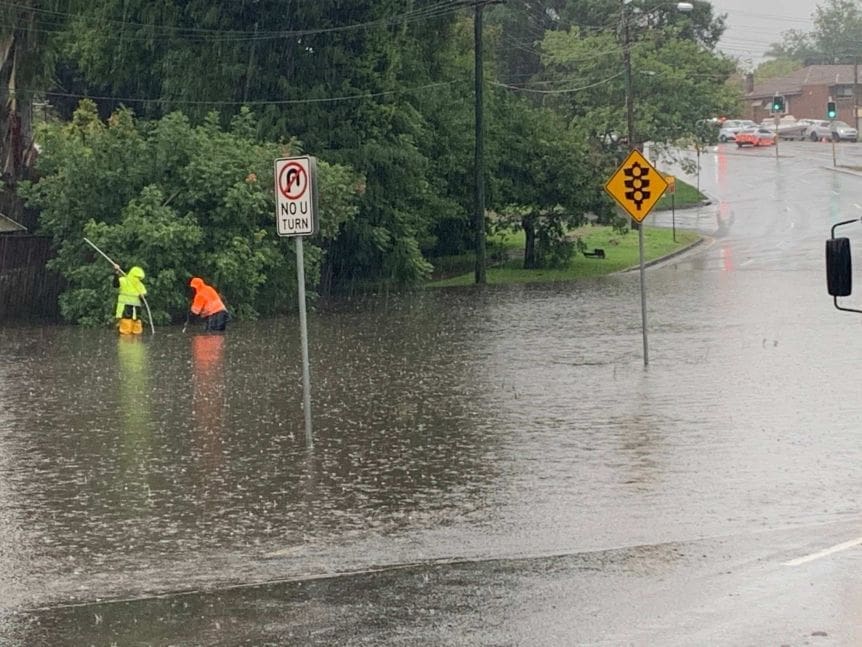
During floods, storms, and emergencies — visibility is what determines the response.

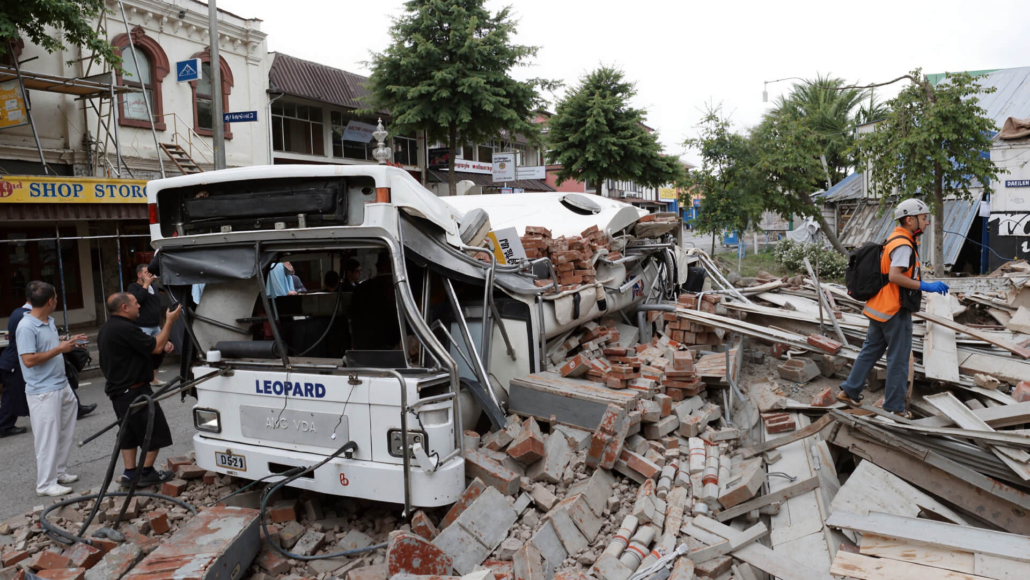
Flovac monitoring gives operators immediate situational awareness during extreme events: which areas remain operational, which pits are under stress, whether vacuum integrity is holding, and where urgent attention is needed.

In flood-prone installations, real-time monitoring has been the difference between a managed response and an uncontrolled event. Operators who can see the network clearly make better decisions, faster.

WHAT’S INCLUDED

A monitoring platform built specifically for vacuum sewer networks

Generic SCADA or telemetry platforms generate data. Flovac monitoring generates operational intelligence, because it is designed around how vacuum networks actually behave, not adapted from another application.

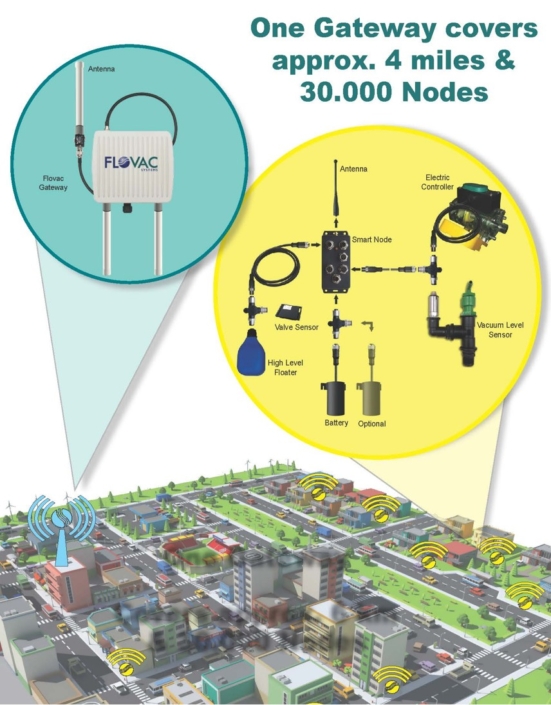
The platform includes wireless and wired pit monitoring, vacuum and pressure sensing, pump station monitoring, rainfall integration, cloud-based dashboards, remote alarm management, historical trend analysis, SCADA integration, and mobile and desktop access.

Every system Flovac monitors contributes to a growing operational intelligence dataset built across hundreds of systems, dozens of environments, and decades of operation. That dataset is what makes the analysis increasingly useful over time,  and what no competitor can replicate quickly.

FURTHER READING

Monitoring for Engineers and Utility Managers → How monitoring data is helping engineers and utilities improve system performance, capacity planning, and long-term infrastructure decisions.

Effective mitigation of rain water infiltration – Miles Crossing Oregon

Proactive monitoring reducing sanitary sewer overflows – Apalachicola, Florida

Restoring confidence in vacuum sewer technology through easy operator access – JEA Jacksonville Florida

Real time data enabling swift responses to Hurricanes and major storm events – Key Largo, Florida

Using the platform to remotely handle large population fluctuations – Exmouth Australia

Identifying aging and broken infrastructure – St Huberts Australia 

If you are already operating a vacuum sewer network, monitoring is the most direct path to lower operational cost, reduced risk, and better long-term performance.

If you are evaluating vacuum sewer technology, monitoring is part of what makes the case.

Either way, Flovac can show you what your network could look like with full operational visibility.

Vacuum System Design

Vacuum Pump Station

Vacuum Mains

Collection Pit

Vacuum Interface Valve

Monitoring