Undersized, or Underperforming? Know Which Before You Invest
An undersized system and an underperforming one look identical from the control room. They need very different answers — and lessons from power, rail, roads and our own industry show why it pays to know which you have.
Does your sewer system feel undersized — struggling with today’s load, with growth still to come? It is a common conclusion, and sometimes the right one. But before committing capital to a bigger station, a second station or larger vacuum mains, it is worth stopping to ask a harder question: is the system genuinely too small, or is it not performing as it should?
The answer matters, because the two problems look identical from the control room and have very different solutions. An undersized system needs more capacity. An underperforming one needs its existing capacity found and released — usually for a fraction of the cost.
Other infrastructure sectors have learned to tell the difference, sometimes expensively. Their experience is worth borrowing.
Every infrastructure sector has learned this lesson
Power: more from the reactors already running
In October 2026, two of the largest nuclear operators in the United States committed billions of dollars — not to new reactors, but to getting more from the ones they already run. Constellation Energy announced upgrades at 11 reactors across six sites, expected to add 890 MW of capacity, with more than US$4.3 billion invested and the first upgrade online by 2028. Days earlier, the US Department of Energy made a conditional loan commitment of up to US$4.2 billion to Vistra for upgrades at three plants, adding 433 MW and supporting another 20 years of operation.
The industry calls these “uprates”: new turbines, generators and digital controls that let an existing plant safely deliver more. They are major engineering projects, not shortcuts. But they start from a simple discipline — understand precisely how the existing asset performs, find the margin that is genuinely there, and release it before committing to a new facility. Commentators were also careful to note that uprates don’t remove the need for new plants forever. The point is to know which situation you are in.
Wastewater: our own industry learned it fifty years ago
When the US EPA funded municipal treatment works under its construction grants program, applicants had to show that the sewer network feeding a plant was not subject to excessive infiltration and inflow. “Excessive” had a practical, economic definition: extraneous water that would cost less to remove through rehabilitation than to transport and treat. Where the analysis pointed to a problem, a Sewer System Evaluation Survey was carried out to find the sources, their flow rates and the cost of fixing them.
The logic was straightforward. Without that step, communities would have paid to build treatment capacity for groundwater and stormwater. Understanding the network came before sizing the plant. The federal grants program has since been replaced by state revolving funds, but the principle has outlived it: many state programs still ask applicants to demonstrate that their sewers are not subject to excessive infiltration and inflow before treatment works are funded.
The same thinking applies in reverse when a new system is being chosen. At Tea Gardens on the NSW Mid North Coast — a development of close to 3,000 lots on flat, water-charged ground — MidCoast Water selected a Flovac vacuum system partly because of its better wet-weather performance. As the utility’s design manager explained at the time, keeping stormwater and groundwater out of the sewer meant MidCoast Water did not have to augment its treatment plant and effluent management system to as large a size as a gravity system would have required. One vacuum station also replaced the 13 pump stations a gravity design would have needed.
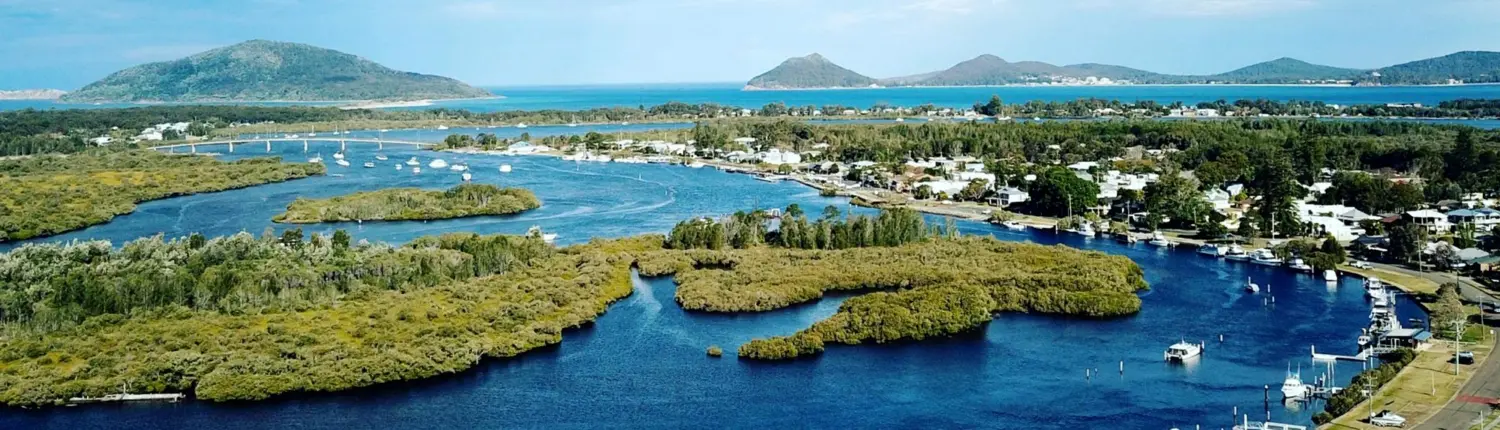
Tea Gardens high water table area with concerns about infiltration
Whether the asset is a treatment plant or a pump station, the capacity it needs depends on how much water the network lets in.
Rail: one crossover set the capacity of a whole line
For years, London Underground could run only 24 trains an hour on the northern end of the Victoria line, beyond Seven Sisters. The limit was not the trains, the tunnels or the signalling. It was the layout of a single crossover at Walthamstow Central, where trains reverse. Renewing that crossover — alongside the line’s wider signalling and train upgrade — allowed every peak train to run the full length of the line and lifted capacity for stations north of Seven Sisters by more than 40%. The Victoria line now runs 36 trains an hour in the peaks.
The capacity of the system was set by one restriction. Find it, and the rest of the line can do its job.
Roads: same asphalt, better control
On Melbourne’s Monash Freeway, VicRoads trialled a coordinated ramp-metering strategy across six consecutive inbound on-ramps. Compared with the ramp-metering system it replaced, peer-reviewed results showed a significant increase in traffic throughput and reduced travel times — without adding a lane. The approach was then rolled out across 63 on-ramps on the wider upgrade route.
Throughput was limited not by the road itself, but by how traffic was let onto it.
Planning: a hierarchy, not a reflex
Infrastructure Victoria’s 30-year strategy formalised the same thinking as a planning sequence: first look at managing demand on existing infrastructure, then at getting better use from existing assets, and only then at expanding existing assets or building new ones. It is a hierarchy that applies equally well to a single vacuum pump station.
What this looks like in a vacuum sewer
The question applies to any sewer system. Vacuum systems happen to be one of the easiest places to answer it, because almost everything that matters can be measured.
A vacuum pump station is not simply a set of pumps. Its performance is the product of the whole system: the sewage arriving at each collection pit, the air admitted with every valve cycle, the integrity of the network, the profile of the mains, and the way the station’s controls respond to all of it.
When a station runs long hours, struggles to hold vacuum, or alarms during wet weather, the symptoms show up at the station. The causes are often somewhere else. The ones we see most often include:
- Leakage. Vacuum pumps evacuate air whether or not sewage is moving. A small leak in a main, fitting or collection pit is a load the station carries 24 hours a day.
- Valve cycling that doesn’t match the sewage. Valves cycling far more often than the flow from their properties would require, staying open too long, or activating without a genuine sewage load. Each extra cycle admits air the station has to remove.
- Inflow and infiltration. Rainfall and groundwater entering through property connections, pit lids or damaged gravity laterals, turning a storm into a capacity problem.
- Network restrictions. Sags, waterlogged sections, poorly configured lifts, or a division valve left partly closed — local restrictions that limit what the whole system can do.
- Pump condition. Worn vacuum pumps delivering well below their rated capacity, so the station is effectively smaller than its nameplate.
- Controls and setpoints. Setpoints that have drifted, alarm logic that locks pumps out, or a variable speed drive added to manage a symptom that ends up masking its cause and increasing run hours.
Every one of these makes a system look undersized. None of them is solved by a bigger station. Adding pumps to a leaking network increases energy use and running hours, moves the problem somewhere else, and leaves the community paying for capacity it doesn’t need.
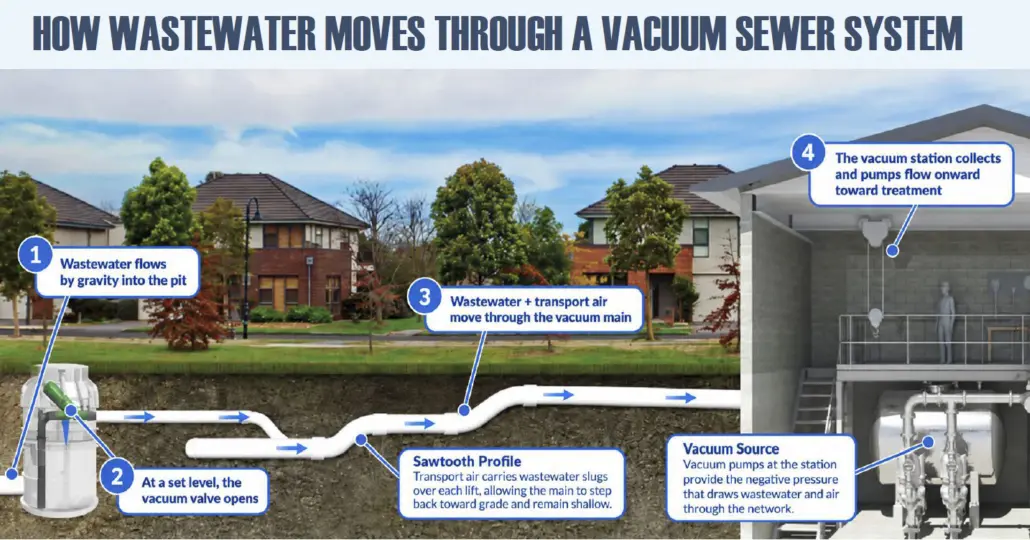
Reference APEX Companies KLWTD Flovac Americas WEFTEC Presentation September 2026
The same applies to the mains. We have had customers consider upsizing their vacuum mains to relieve a struggling system. Replacing buried pipe along an existing route means major civil works, significant cost and real disruption to the community it serves. And where the underlying cause is a local restriction — a sag, a waterlogged section, a poorly configured lift or a partly closed division valve — a larger pipe across the whole route may not address it at all. Finding the restriction first is far cheaper than replacing the network around it.
A system that is underperforming will still underperform after it has been made bigger.
Eight questions to answer before any significant upgrade
Before concluding a system is undersized — and before recommending additional pumps, a larger station or a second station — we believe a utility should be able to answer eight questions with evidence:
What was the system originally designed to handle? This is usually our first question, and the answer has often been forgotten. Design reports, connection numbers, design flows per person and staging plans can be lost as systems change hands over decades. Many staged designs allowed from the outset for a pump upgrade, or space for a third or fourth pump, as the catchment developed — an option that may already be built into the station.
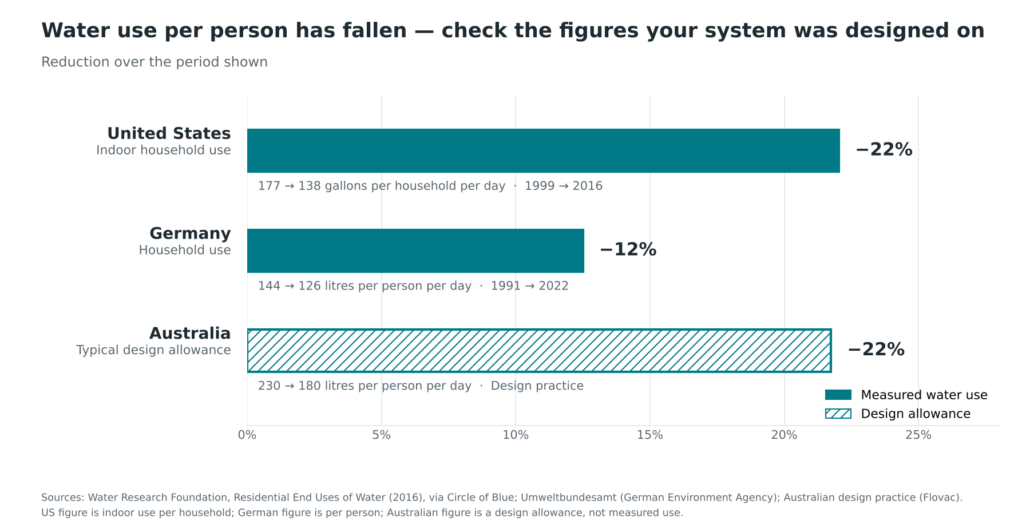
What is it actually receiving — and if it isn’t performing to design, what changed? Measured flows in dry and wet weather against the original design basis. Design allowances themselves have moved: water use per person has fallen across much of the developed world. In the United States, indoor household water use fell by 22% between 1999 and 2016, largely because of more efficient toilets and washing machines — yet design flows of around 100 gallons per person per day remain common. In Germany, household water use fell from 144 to 126 litres per person per day between 1991 and 2022. In Australia, typical design allowances have fallen from around 230 to around 180 litres per person per day. A system designed on older figures may have more capacity for connections than anyone assumes. If it is struggling below its original design load, the question becomes what changed, and what went wrong.
How efficiently is it generating vacuum? Actual pump performance against rated capacity, running hours, and how quickly the station recovers vacuum after load. As a guide, vacuum pumps in a fully developed, well-tuned system typically run around 6–8 hours a day in total, with an air-to-liquid ratio of about 8:1 to 10:1. A ratio approaching 30:1 points to too much air — leaks or tuning. A ratio of 4:1 to 6:1 points to too much water — infiltration, inflow or higher flows than expected.
How are the valves behaving? Cycle frequency at each collection pit against what the connected properties would reasonably produce, and which pits stand out.
Where is air entering that shouldn’t be? Vacuum decay testing, sector by sector: with the vacuum pumps stopped, close the division valves and measure how quickly each section loses vacuum. A tight section holds; a leaking one decays quickly and points to where to look.
Where is the network restricting flow? Line profile, lifts, waterlogging, and valve positions.
Are the controls helping or hindering? Setpoints, pump sequencing, alarm logic and any drives added since commissioning.
What future demand is credible? Committed connections and realistic growth — not a stack of worst-case assumptions.
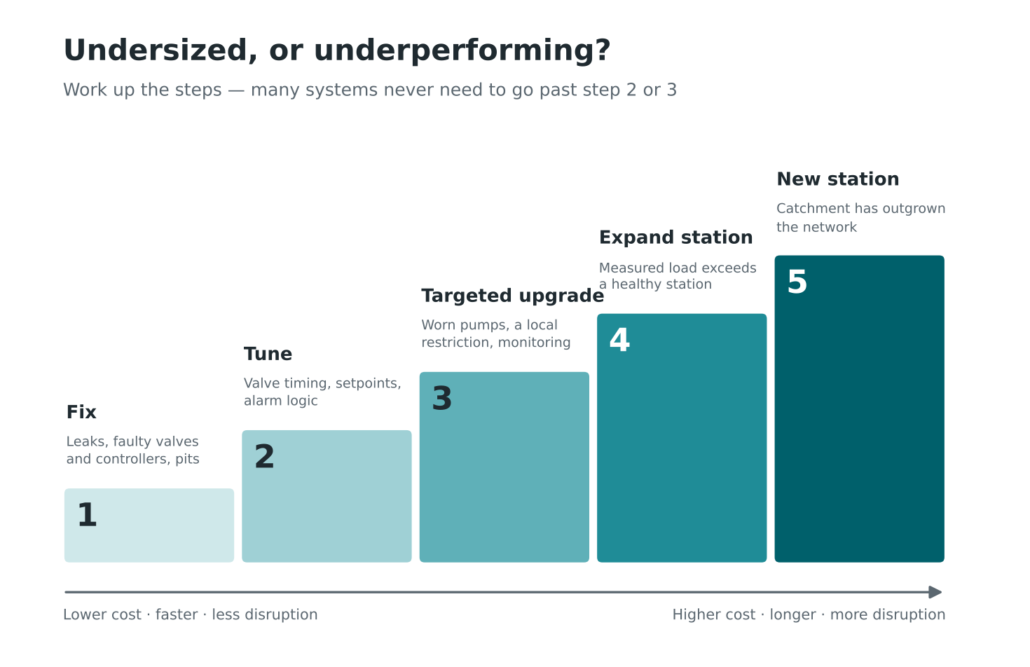
Only with those answers in hand does it make sense to rank the options. In practice, that ranking usually follows the same hierarchy other sectors use:
| Step | Response | What it means in a vacuum sewer |
| 1 | Fix | Repair leaks, faulty valves and controllers, damaged collection pits. Cheapest, fastest, and often enough on its own. |
| 2 | Tune | Correct valve timing, setpoints, sequencing and alarm logic so the existing equipment works as designed. |
| 3 | Targeted upgrade | Replace worn pumps, relieve a specific network restriction, or improve controls and monitoring where the evidence points. |
| 4 | Expand the station | Add generating or discharge capacity where measured load and credible growth genuinely exceed what a healthy station can deliver. |
| 5 | New station | Where the catchment has outgrown what one station and its network can serve hydraulically — a planning decision, not a fault response. |
Many stations never need to go past step 2 or 3. Some genuinely do need step 4 or 5 — and when they do, the assessment means the new capacity is sized for the real load rather than for problems that could have been fixed.
Monitoring changes the conversation
Where a system has network and station monitoring, most of these questions can be answered from data that is already being collected: cycle counts for every collection pit, running hours for every pump, vacuum levels through a storm. An upgrade decision becomes a matter of evidence rather than judgement.
Where that data doesn’t exist, a short, targeted monitoring period before design is usually some of the best money a utility can spend. It costs a fraction of a station expansion, and it often changes the answer.
Key Largo, Florida: finding the water before sizing for it
The Key Largo Wastewater Treatment District (KLWTD) serves more than 14,000 people through a distributed vacuum network of several stations on a low-lying island chain, exposed to rainfall, tides and high groundwater. As KLWTD, Apex Companies and Flovac Americas presented at WEFTEC in September 2026, a station can show low vacuum, abnormal demand or slow recovery while the cause sits anywhere upstream in its basin. Traditional troubleshooting narrows the search one isolated section at a time — and wet-weather or tidal conditions have often passed before crews arrive.
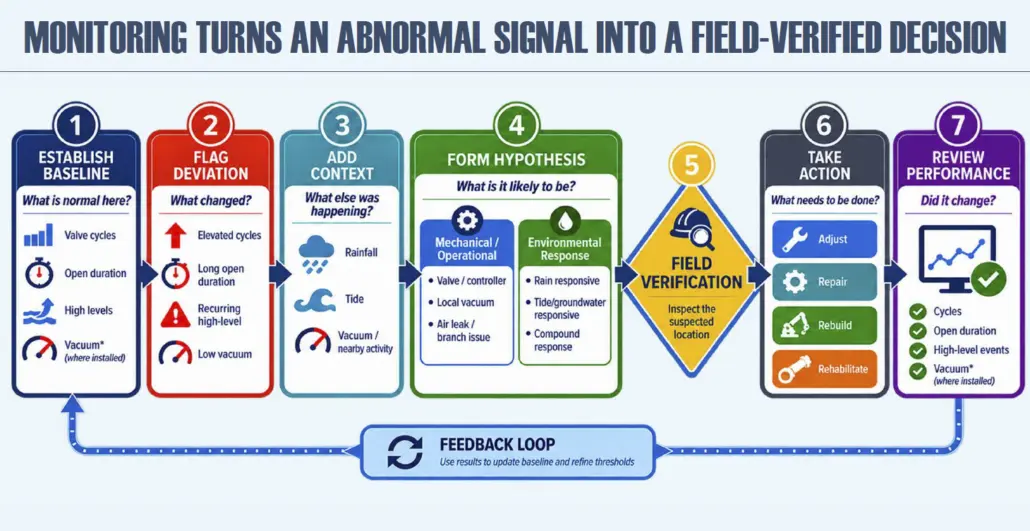
Reference APEX Companies KLWTD Flovac Americas WEFTEC Presentation September 2026
With around 2,975 collection pits and buffer tanks monitored, the picture changed:
- Faster diagnosis. Of 236 system-generated alarms reviewed between October 2024 and May 2026, 147 (62%) were traced to a likely source using location-specific monitoring data.
- Rain, tide or both. Comparing each pit against its own dry-weather baseline separated rain-driven, tide-driven and combined responses. Some pits were activating more than ten times their normal rate on high-tide days.
- Targeted field work. In one case, recurring tide-aligned valve activity at a single location led crews to a broken service lateral, confirmed within 48 hours. Field review of the ten highest-ranked screening candidates turned each into an actionable finding — saltwater intrusion at fittings, private-side inflow, a long-standing leak and buffer tank maintenance issues.
- Scale of the opportunity. A planning-level screening estimate put the excess volume associated with the top 500 candidates at around 20 million gallons for 2025. KLWTD is clear that this is a screening estimate based on an operating approximation per valve activation, not metered or confirmed I&I — but it shows where rehabilitation will release capacity, and in what order.
Every gallon of extraneous water removed is capacity returned to the stations, the transmission mains and the treatment plant.
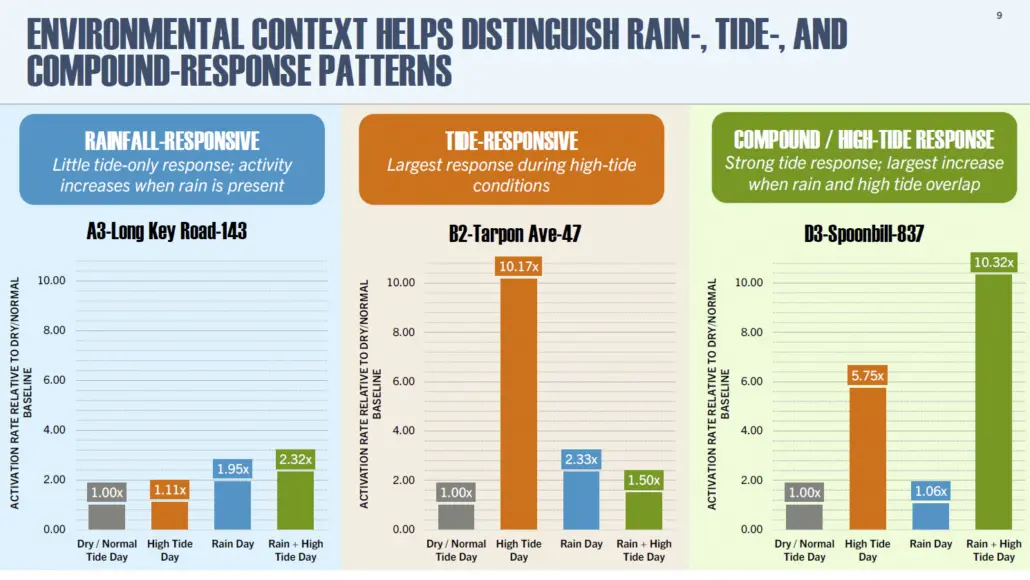
Reference APEX Companies KLWTD Flovac Americas WEFTEC Presentation September 2026
Exmouth, Western Australia: when the design assumptions changed
Exmouth, on the Ningaloo coast, is served by a Water Corporation vacuum system with a main line of around 2.6 km and a major hotel at its far end. The town’s population of around 2,500 can rise to around 6,000 in peak holiday periods, making inflows extremely variable. The system had also been designed expecting development along the main line that never eventuated — so the air those connections would have added to the main wasn’t there.
During peaks, the line could flood and pressures collapse. With no visibility of pressure beyond the station, operators had to lift pit lids along the line, often at night, and manually open valves to admit air, while wastewater was tankered away until pressures recovered.
In October 2022, Flovac installed pressure monitoring at points along the main and valves that can be opened remotely or by programmed rules. A typical rule: if pressure at one point falls below a set level on two consecutive checks, open a nominated valve for a few seconds to admit air, then recheck — and only if the station itself is holding vacuum. Operators can see pressures along the whole line, adjust the rules and setpoints themselves, and activate valves from a screen instead of from the roadside. Rajiv Narendranathan, Principal Engineer at the Water Corporation, presented the work at the AWA conference in Darwin in 2023. He has since noted that the pumper trucks the Water Corporation used to rely on each Easter to keep the system running are no longer needed — a major cost saving for the utility.
This is question two in practice: the system wasn’t too small. What changed was the development pattern it was designed around, and the fix was to restore the air it was missing.
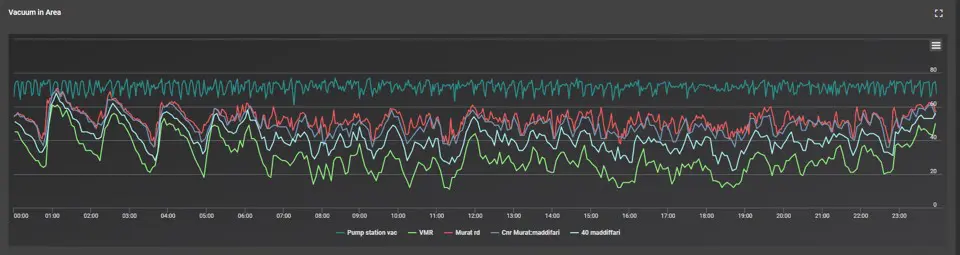
Exmouth Pressure Graph with Automated Air Injection
Flovac monitoring system information page
Sometimes a bigger station is the right answer
This isn’t an argument against investment. Catchments grow. Networks are extended beyond what one station can serve hydraulically. Equipment reaches the end of its life. Resilience and redundancy requirements change. In those situations, more capacity — sometimes a new station — is exactly the right decision.
The aim is simply to know which problem you have: to be confident that the capital is buying genuine capacity, not compensating for leaks, settings or restrictions that could have been resolved for far less.
How Flovac approaches it
Flovac is a specialist manufacturer and supplier of complete vacuum sewer systems, and we support those systems across their whole life — from design assistance and commissioning through to monitoring, optimisation and long-term support. That perspective is why we look at a struggling station as part of a system rather than as a pump problem.
In 2021 we wrote about what to do when vacuum pumps are due for an upgrade, recommending two first steps: a System Audit, to make the network airtight and establish the true air-to-liquid ratio, and a Capacity Audit, to establish what the system was designed for and what it can realistically handle over the next 15 years. That advice still stands. [LINK: My vacuum pumps are due for an upgrade — what next?]
We are now bringing those two audits together into a standard Flovac Capacity and Performance Assessment, applied before any significant station or network upgrade — pumps, a new station or larger mains. It draws on what we have learned from vacuum systems around the world, combined with the local knowledge that matters most — the operators who run the system every day and usually know exactly where it misbehaves.
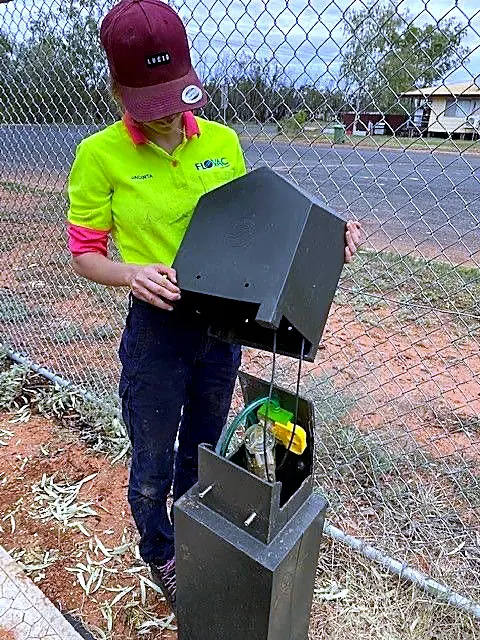
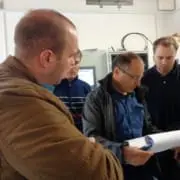
An operator in the field at a monitoring pillar — supports the point that operators know where the system misbehaves
If you are planning a change to a vacuum pump station’s pumps, controls or capacity, talk to our engineers early — before the equipment order goes in, not after.
References
- MIT Technology Review, “How much more can nuclear power plants give?”, 15 Oct 2026 — https://www.technologyreview.com/2026/10/15/1146577/nuclear-power-upgrade/
- POWER Magazine, “Google deal backs 890 MW of Constellation nuclear uprates at 11 PJM reactors” — https://www.powermag.com/google-deal-backs-890-mw-of-constellation-nuclear-uprates-at-11-pjm-reactors/
- World Nuclear News, “DOE offers Vistra loan for reactor upgrades and uprates” — https://world-nuclear-news.org/articles/doe-offers-vistra-loan-for-reactor-upgrades-and-uprates
- US Code of Federal Regulations, 40 CFR 35.927 — Infiltration/inflow analysis and sewer system evaluation survey — https://www.gpo.gov/fdsys/pkg/CFR-2012-title40-vol1/pdf/CFR-2012-title40-vol1-sec35-927-3.pdf
- Transport for London, “Major works to improve Victoria line services” (2015) — https://tfl.gov.uk/info-for/media/press-releases/2015/july/major-works-to-improve-victoria-line-services
- Modern Railways, “Victoria Line moves to 36tph” — https://www.modernrailways.com/article/victoria-line-moves-36tph
- Papamichail et al., “Heuristic ramp-metering coordination strategy implemented at Monash Freeway, Australia”, Transportation Research Record 2178 (2010) — https://doi.org/10.3141/2178-02
- Infrastructure Victoria, Victoria’s Infrastructure Strategy 2021–2051 (summarised in OECD Infrastructure Toolkit) — https://infrastructure-toolkit.oecd.org/wp-content/uploads/Australia_VictoriaPlan.pdf
- Georgia EPD, Guidance: Project Requirements — Clean Water SRF (example of a current state I/I requirement) — https://epd.georgia.gov/documents/guidance-project-requirements-clean-water-srf
- Flovac, “Exmouth: Automated Air Injection”, 15 Nov 2023 — https://flovac.com/exmouth-aai/
- Narendranathan, R. (Water Corporation), “Improved performance of vacuum sewers with pressure monitoring and programmed air injections”, AWA conference, Darwin, 2023
- Apex Companies, KLWTD and Flovac Americas, “From vacuum monitoring to targeted I&I rehabilitation”, WEFTEC, September 2026
- Flovac, “My vacuum pumps are due for an upgrade — what next?”, 6 May 2021 — https://flovac.com/my-vacuum-pumps-are-due-for-an-upgrade-what-next/
- Circle of Blue, “Study: efficient fixtures cut U.S. indoor water use” (Water Research Foundation Residential End Uses of Water, 2016) — https://www.circleofblue.org/2016/water-management/study-efficient-fixtures-cut-u-s-indoor-water-use/
- Maryland Department of the Environment, Design Guidelines for Wastewater Facilities (100 gpcd projection basis) — https://mde.maryland.gov/programs/permits/watermanagementpermits/documents/wastewaterdesignguidelines-2013.pdf
- Umweltbundesamt (German Environment Agency), household drinking water use per person — https://www.umweltbundesamt.de/en/node/21909